Take a look at the latest company report created by the Corporate Finance division about Cyberoo. Cyberoo_Company_Report_CIC.pdf Download Authors: Giuseppe Caccamo & Riccardo Coti Zelati
Unicredit’s Bold Ambition: TAKING THE LEAD IN EUROPEAN BANKING On September 11th, UniCredit acquired a 4.5% stake in Commerzbank after the German government sold 531.1 million shares, roughly 4.49% of its shareholding in Commerzbank, for about $750 million. The lender doubled its holding in Commerzbank and reached 9% of the shares.On September 23rd, Unicredit asked for approval to increase its stake in Commerzbank to 29.9%, as for the ECB it constitutes as a qualifying holding. Meanwhile, it entered into financial derivative contracts, specifically zero collar derivatives, covering about 11.5% of Commerzbank’s shares. Settlement of these derivatives, which would transfer actual shares to Unicredit, is conditional to obtaning the necessary regulatory approvals.Therefore, Unicredit’s current direct ownership stands at 9%, with the potential of incresing the stake up to 20.5% upon settlement…
TRUMP’S RETURN TO PRESIDENCY: impacts on the stock market and economic outlook Donald Trump's return to presidency is a highly debated topic, with the markets reflecting both hope and apprehension. His presidency promises to bring drastic changes in economic policy, with key discussions around tax reforms, deregulation, and trade policy. All these factors are already influencing investor behavior and shaping market trends.After Trump's victory, the stock market had a noticeable rally as investors became relieved with the clarity of the election outcome and the anticipation of market-friendly policies. The S&P 500 reached a record high after the news, while the VIX went down, amidst the exciting expectations of tax cuts and deregulation.The Republican leader has long demonstrated his fascination with cryptocurrencies, and the leading crypto now stands close to the…
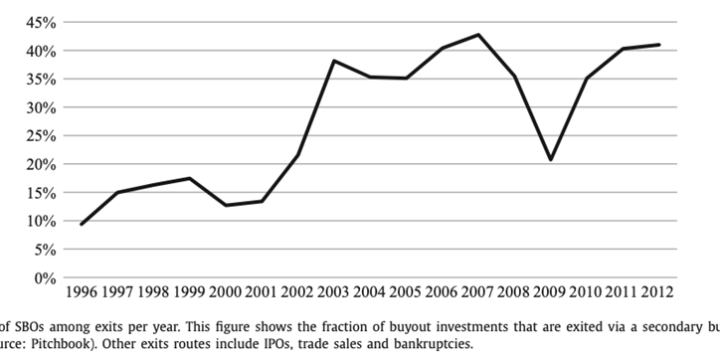
Secondary Buyouts It is worth analyzing one of the most common and controversial way in which a PE firm is able to exit from an investment that has been made during the life cycle of one of its Private Equity fund. Secondary buyout, also known as SBO, is a strategy that is increasingly used starting from 1996; in this particular exit strategy the PE firm sells a portfolio company to another PE firm. According to On Secondary Buyout 1, SBO exit strategy sharply increased starting from roughly 9% in 1996 to more than 40% in 2012. To present and explain why this type of exit is frequently seen as a possible manifestation of agency conflicts and opportunistic behaviors between GPs (General Partners) and LPs (Limited Partners), we can start from…
ELI LILLY FACES RATING DOWNGRADE DUE TO SALES ISSUES, WHILST MOODY’S STOCK REACHES ITS ALL TIME HIGH Erste Group, one of the main European banking groups based in Austria, recently modified its rating of portfolio holding Eli Lilly (LLY) (0.2 units purchased @582.99). Its recommendation changed from Buy to Hold and the main factors that contributed to this downgrade are two ratios: inventory/sales and receivables/sales. What analysts pointed out is that, despite the positive expectations about Eli Lilly’s earnings trend in the near future, the previously cited ratios increased too much, reaching their highest values in the last 6 years. A high inventory/sales ratio may indicate an overstocking or a worrying decrease in customers’ demand, while a rising value for receivables/sales probably reflects the difficulties faced by Eli Lilly in…
Market Volatility Amid Earnings Season and Policy Shifts: NVIDIA, Oklo, and Eli Lilly in Focus During the last two weeks, the stock market has fluctuated greatly, partly due to the election of the new US president, Donald Trump, and partly because we’re right in the middle of earnings season, when many companies report their earnings and forecasts, leading to changes in stock prices.NVIDIA Our holding, Nvidia (NVDA), has probably been one of the most talked about stocks in recent years due to its amazing returns. As of today, it is also the world’s largest company by market cap. The company reported its Q4 results on Wednesday 20 after the market closed, and despite topping expectations, the stock shares fell, failing to continue to fuel the AI spark. The company reported…
Comparing Solutions: What can Spain learn from 2009 L'Aquila Earthquake The floods of October 29th have had major natural, social and economic consequences on Eastern Spain. Enraged residents confronted the king, the prime minister and the region’s president in Paiporta, one of the towns with the highest death toll: Being put on the spot, the government now has to think about the next steps carefully. Besides humanitarian aid, what fiscal measures can the government introduce in order to attenuate the economic impact of the flood?Italy, during its history, has been hit by many natural disasters, and has implemented different policies that could also help Spain. What has Italy done in the past in similar situations and how did those measures help?One of Italy’s most recent cases was in 2009, when…
Navigating Capital Markets: Key Investment Instruments Explained In capital markets, various types of instruments can be bought, providing different ways to invest our money. These instruments offer opportunities to grow our savings, protect them from inflation, or simply generate additional income.Investing in the right mix of these instruments can help build a robust financial portfolio tailored to individual risk tolerances and financial goals.There are four main categories of instruments in capital markets: bonds, derivatives, ETFs, and mutual funds.The simplest way to invest money is by purchasing bonds. Legally, bonds are essentially documents that grants the right to be repaid the money lent to the issuer. This document, called “security” represents the bond. Bonds can be categorized into corporate bonds and government bonds, depending on the issuer—either a corporation or a…
Immerse yourself in the world of management consulting with an exclusive visit to Bain & Company’s prestigious offices in Milan. Connect with industry professionals and explore a dynamic career path. This company visit offers a unique chance to experience the dynamic world of consulting and engage with one of the industry’s leaders. Don’t miss out! Event Details 📅DATE: June 18th, 2025📍LOCATION: Milan, Italy 🎯TYPE: Company Visit Application & Selections This event is exclusively for members of the Cattolica Investment Club. A selection process may be conducted. Further details and participation guidelines will be shared soon. What to Expect The visit will include interactive sessions and insights into Bain's methodologies. Our team is still working on finalizing the event details to ensure the best possible experience. A detailed agenda and activities…
Introduction to IPOsIPO stands for Initial Public Offering meaning that shares of a private company are made available to the public for the first time through a stock issuance. In order to have an IPO the company has to satisfy some requirements by the Securities and Exchange Commissions (SEC).Going public represents a big opportunity for companies as they might be able to raise a lot of equity capital from public investors. Other than the capital perks which might allow the company to grow and expand, listed companies increase transparency and might help obtain better terms when trying to borrow funds.Historically, the first modern IPO is considered to be when the Dutch East India Company offered his shares to the public in 1602. Since the 2008 crisis there’s been a decrease…